






Soil probes and associated weather stations are becoming increasingly important in assisting farmers to make better informed farm management decisions.
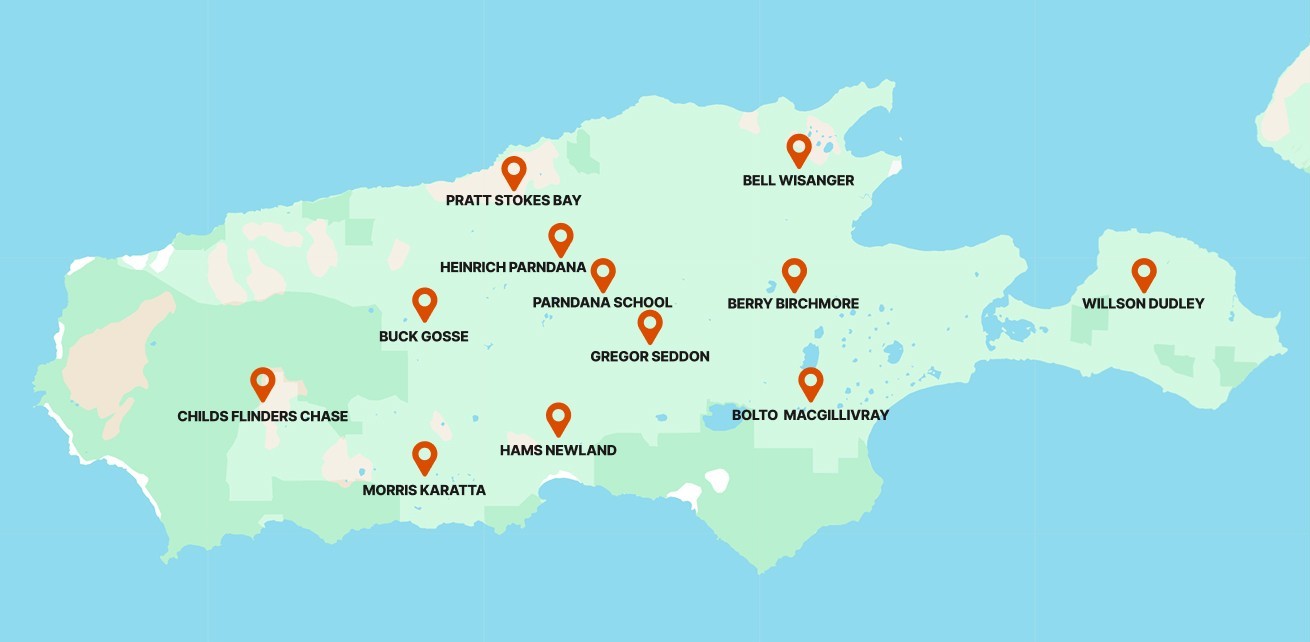
Three soil probes had previously been established on Kangaroo Island, but given the extensive variation in weather across the island, the data had limited applicability to the district in which they are situated. Thanks to funding by South Australia and Australian Government’s National Disaster Recovery Funding Arrangements, an additional seven soil probes were installed across Kangaroo Island through 2021 and 2022 which has made the data readily available to local farmers. In recent years, thanks to funding from the Kangaroo Island Landscape Board's GrassRoots program, three additional soil probes have been installed including one at the Parndana school campus brining to total number of weather station soil probes to thirteen. This expanded soil probe network will enable farmers to make more informed decisions in an increasingly more variable climate, enabling them to maintain production and efficiency.
Over the last two years, AgByte have developed a new data hosting platform as the previous one was slow and has limited development opportunities. While still being developed, the new platform will provide forecasting capabilities for forward planning and the calculation of extension data for alerts on critical areas such as heat stress, fly strike, frost risks and foot-rot conditions. The data also informs on farm decision such as seeding, irrigation, harvest and importantly high fire danger risk days.
In 2024 thanks to funding from Foundation for Rural and Regional Renewal's 'Helping Regional Communities Prepare for Drought Program' thanks to funding from the Federal Governments Future Drought Fund the new weather station dashboard was launched at a Community Demonstration Day along with a suite of fact sheets and user guides.
This project has been delivered in partnership with Livestock SA, Agriculture Kangaroo Island (AgKI), Department of Primary Industries and Regions (PIRSA), Kangaroo Island Landscape Board and Foundation for Rural and Regional Renewal (FRRR).
You can access each of the AgKI Ag Trials Booklets below. This Content List will also allow you to search for specific information and be directed to the each Booklet that contains that information.
Containment feeding can be a good option to allow stock to be successfully supplementary fed while maintaining paddock condition.
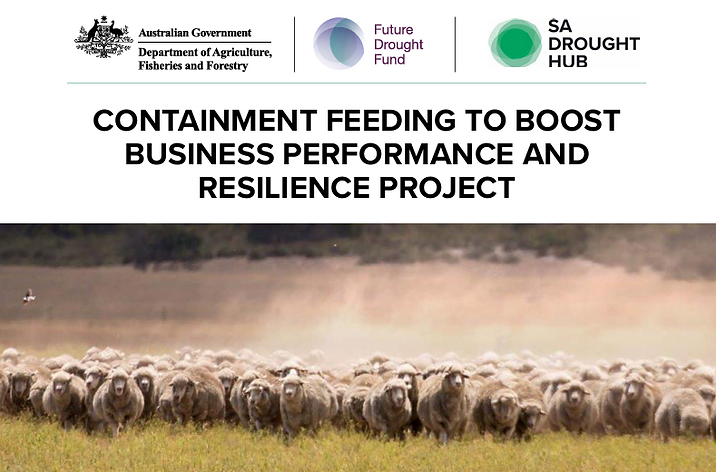
There are a range of pros and cons with containment feeding, which have been explored at workshops supported by the SA Drought Hub. One of the workshop expert presenters, Deb Scammell (Talking Livestock), worked with Dr Penny Schulz (SA Drought Hub) to capture the workshop learnings in this comprehensive guide to containment feeding. (click on image below)
GrazFeed helps farmers save supplement costs and reach livestock production targets by calculating the daily nutritional requirements of sheep and cattle. It is an up-to-date and user-friendly computer version of the Australian Ruminant Feeding Standards that can be applied to any breed or class of sheep and cattle and takes into account the effects of selection and substitution by grazing stock (click on image below)
AgKI in partnership with PIRSA and KI Landscape Board have developed some Fact Sheets and Case Studies on dam placement and construction along with graded catchments as part of the 'Improving Water Security for KI Farmers' project funded by the SA Drought Hub.
Click on the image below to go to the Project Page for more information.

There are a number of services and avenues for assistance designed to support primary producers during the challenging times impacting the South Australian agriculture sector.
Click on the image below to go to the Project Page for more information.
My Farm Dashboard provides automated access to information by selecting data cards. These data cards include information on things like real time pasture biomass and groundcover estimates, soil moisture and temperature, climate records, seasonal forecasts and weekly commodity prices. The information is customised to your farm location. New data cards are constantly being added (click on image below).

50 minute YouTube video with Deb Scammell, Talking Livestock (click on image below).

Dry season fact sheets (click on image below)
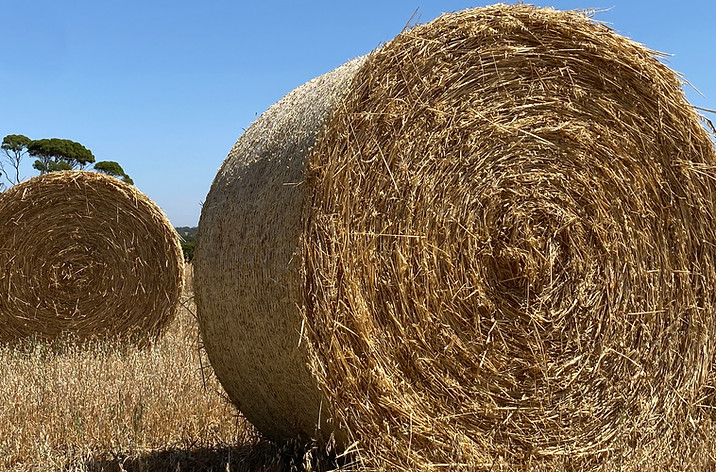
Preparing for dry times through best practice feed conservation and storage is critical for Kangaroo Island livestock producers. This fact sheet has been developed as a tool to improve primary producer decision making around cost effective and sustainable production of hay and silage. (click on image below)
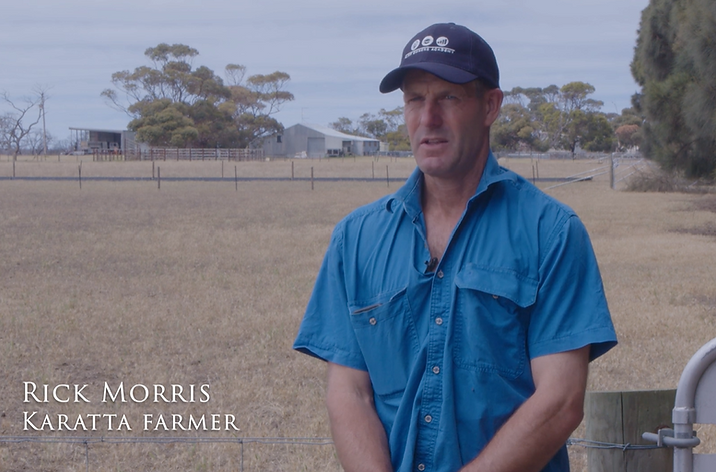
Hear from local Kangaroo Island farmers Andrew 'Aphid' Heinrich and Rick Morris about their containment feeding set ups. In this short video, Aphid and Rick discuss what has worked and what they would change for their set ups.
Thank you to the SA Drought Hub for supporting this initiative.
The resources on this page are of relevance to SA farmers and regional communities. They assist in decision making and potential practice change to build drought preparedness and resilience (click on image below).
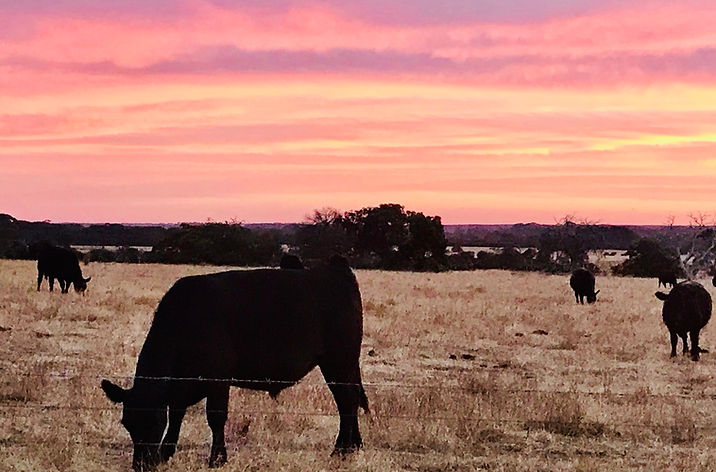
Resources to improve ewe and lamb survival using pre joining assessment tools (click on image below)
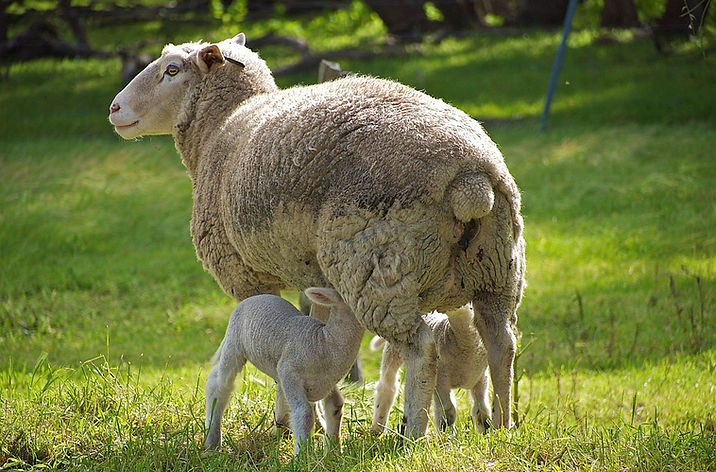
The resources on this page are of relevance to SA farmers and regional communities. They assist in decision making and potential practice change to build drought preparedness and resilience (click on image below).
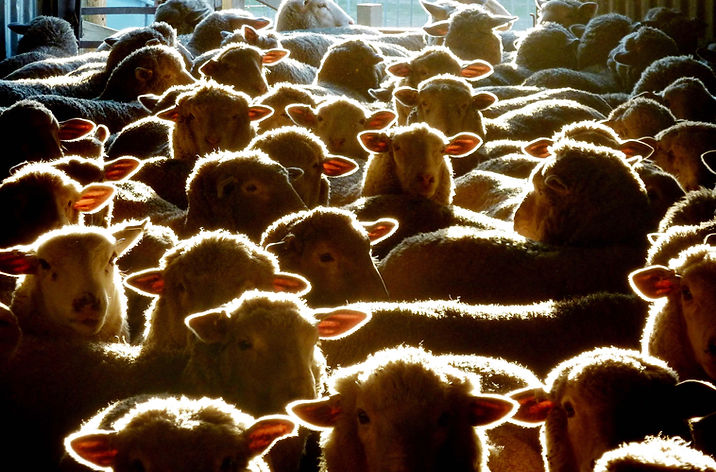
This episode of the SA Drought Hub podcast explores the considerations around keeping sheep in containment in a dry season, how to decide when to let them out before lambing, and what you need to do if you don’t have any green pasture ready for their release (click on image below).
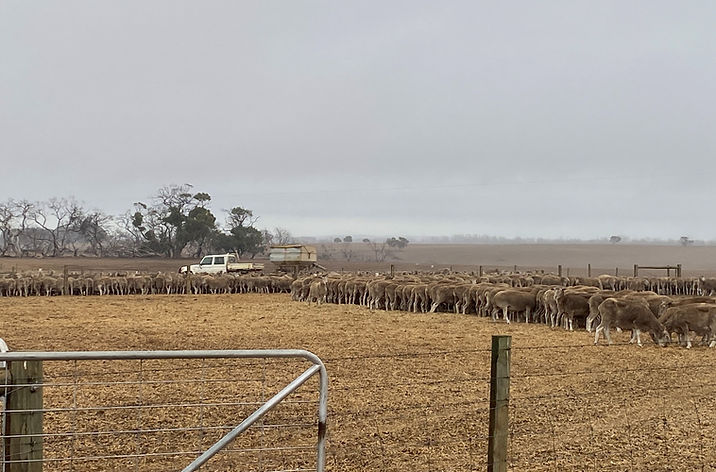
Over the past 8 months we have only had 70mm (Oct-May). With such a late, dry start to the season, AgKI Board member Jenny Stanton has put together some suggestions and recommendations for you to consider (click on image below).
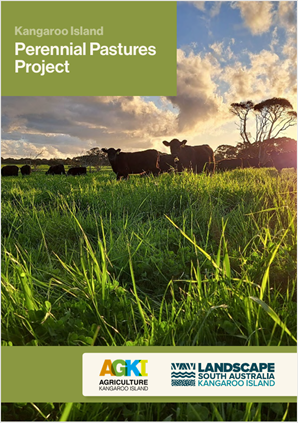
The Perennial Pastures Project is an initiative between the Kangaroo Island Landscape Board and Agriculture Kangaroo Island as a way of capturing the experiences and insights of farmers growing perennial pastures across Kangaroo Island.
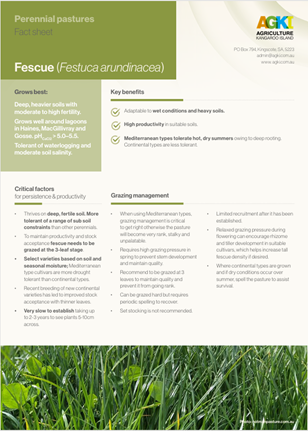
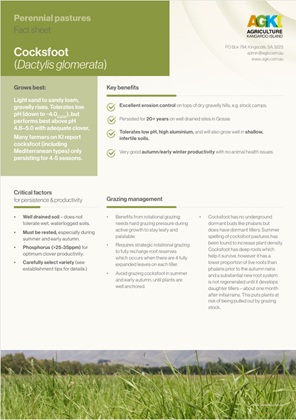
This project has resulted in the production of eight fact sheets focusing on cocksfoot, tall fescue, phalaris, perennial ryegrass, kikuyu, lucerne, herbs and saltland species, as well as two case studies.
You can access this series of Fact Sheets and Case Studies by clicking on the below links.


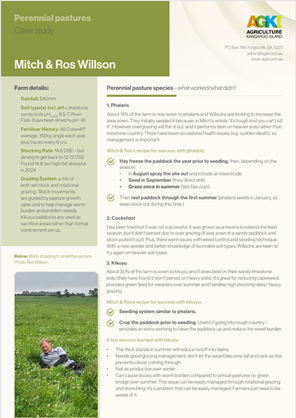


This project, fact sheets and case studies were prepared by Jenny Stanton and Lyn Dohle, edited by Tim Prance. For further information on perennial pastures, please contact:
Jenny Stanton
Phone: 0484 602 946
Email: jennybehenna@hotmail.com

Lyn Dohle
Phone: 0419 846 204
Email: lyn.dohle@sa.gov.au
This project has been supported by the Australian Government through funding from the Natural Heritage Trust under the Climate Smart Agriculture Program and the Kangaroo Island Landscape Board.

AgKI are delivering an Emerging Farmers KI 2026 program thanks to funding from the SA Drought Hub and the Australian Government’s Future Drought Fund. This project page provides an overview of the program along with information on what workshops have already been held and what is planned for the next workshops.
This program supports early to mid-career farmers to make better decisions during challenging seasonal conditions. These challenges can also bring an opportunity to improve how your farm operates. These sessions will help you make practical, informed decisions during or after
challenging seasons, so your business can bounce back stronger and be better prepared for the future.
During extreme seasons and recovery, you'll focus on key on-farm decisions such as:
- Managing feed to support recovery
- Generating cash flow through stock trading or fodder sales
- Planning cropping and fallow strategies
- Investing in infrastructure for long-term benefit.
Looking beyond the current season, you’ll learn how to:
- Reflect on past decisions and identify improvements
- Capture lessons learned
- Plan future investments when finances allow
- Prioritise actions to protect against future events
The program is delivered through small, facilitated peer groups delivered by our program facilitator Rick Morris and special guest presenters.
This creates a supportive environment to:
- Share experiences with other farmers
- Learn what works (and what doesn’t)
- Turn insights into practical actions.
This program is designed for early to mid-career farmers (with two to 10 years experience) who:
- are actively involved in farm management and decision-making
- earn most of their income from farming
- want to improve resilience and long-term performance
- farming on Kangaroo Island
- are over 18 years of age.
To register for this program please email events@agki.com.au with your name and details including where you farm (farm workers welcome) and how many years of experience you have.
The next Emerging Farmers workshop is on 19 October 2026. More details to be released soon.
Please find the details of our previous workshops and the topics covered below:
Workshop Two - Monday 15 June
Pasture composition, economics of pasture renovation and soil fertility.
Workshop One - Thursday 30 April
Program introduction, identification of key learning areas for future workshops.

Agriculture Kangaroo Island (AgKI) is part of the first comprehensive, region-wide evaluation of regenerative agriculture practices in Australia's southern farming areas. As rainfall becomes increasingly variable, farming systems need to adapt and thrive under changing climatic conditions.This project will help farmers and researchers understand how regenerative practices can improve soil health, build drought resilience and support long-term farm viability.
The Five Principles of Regenerative Agriculture
At its core, regenerative agriculture aims to grow healthier soils, delivering better results over time, with fewer inputs and lower costs for farmers. It's built on five key principles:
1) Minimising soil disturbance
2) Maintaining soil cover
3) Keeping living roots in the ground
4) Increasing plant diversity
5) Integrating livestock where appropriate
The Kangaroo Island Trial
The Kangaroo Island trial is a pasture-focused study using wheat, with mowing used to mimic grazing pressure. It compares the following treatments:
- Wheat-on-wheat (annual fertiliser): fertilised every year.
- Wheat-on-wheat (year-one fertiliser only): fertilised in year one only, with no fertiliser applied for the following three years.
- Conventional best practice: a profit-driven annual pasture treatment, fertilised every year and mowed fortnightly through the growing season to simulate grazing.
- Diverse pasture (regenerative): sown with a cover crop in year one, to be terminated in spring for weed control, ahead of perennial sowing in year two. Fertiliser rates vary across plots — annual, every second year, or year one only.
- Amendment-driven (regenerative), biological fertiliser: an annual pasture treatment matched to the conventional plot, but fertilised with a biological product at an equivalent starting phosphorus level, applied intermittently across the trial.
- Amendment-driven (regenerative), biochar-activated microbes: using biochar-activated microbes as the soil amendment.
The project brings together a diverse group of partners, each with a specific role. CSIRO is leading the project, with Ag Excellence Alliance coordinating research trials, demonstrations, extension and monitoring. Regional farming groups, including AgKI, are implementing the long-term trials on the ground, ensuring local relevance and farmer engagement.
To find out more or to get involved, contact AgKI at admin@agki.com.au.